
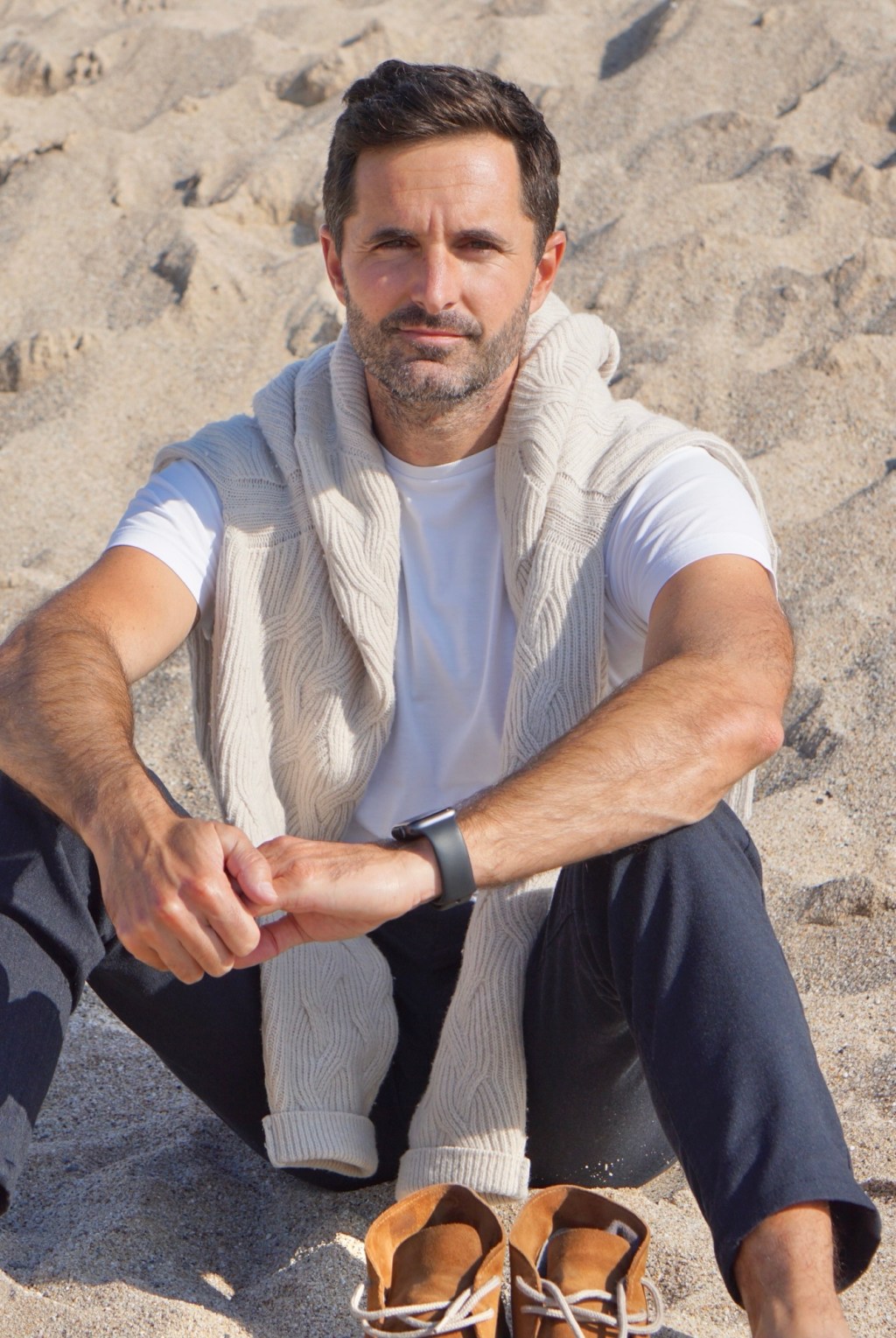
I have a small scar on my forehead. In the right light, I still see it in the mirror.
I was supporting the music teacher in a small rural school when a child accidentally threw a bell. It landed on my forehead. I thought nothing of it until the teacher suggested I clean my face. I was bleeding.
I was there because I had been lecturing future teachers on a job I had never done.
During my PhD in Educational Psychology, I worked as a lecturer at the University of the Basque Country. I taught future PE teachers the theory and research behind their profession. I really enjoyed it.
But my career was pulling me elsewhere. After Rio 2016, where the Spanish canoeing team won three gold medals and one bronze, its best-ever Olympic result, I decided to focus exclusively on my role as Performance Director. I held the position until September 2020.
COVID changed everything. Tokyo 2020 had been postponed, and nobody knew whether the Games would go ahead in 2021. I left my role as Performance Director in September 2020 and went back to the university. This time I also lectured on the master’s programme for sports science graduates training to become secondary school teachers.
I had worked for years as a canoeing instructor and taught hundreds of children to paddle. I had completed two eight-week placements in primary schools. But I had never been the teacher. I had never been responsible for a whole classroom.
I knew Piaget, Vygotsky and many others. I had the qualifications. But I never felt fully honest lecturing on a job I had never done. The gap wasn’t theory. I hadn’t walked in a teacher’s shoes.
So, in June 2021, before returning as Performance Director in December 2021, I enrolled as a supply teacher in the Basque education system. I covered for teachers on sick leave, maternity leave and other temporary absences.
For several months, I worked in all sorts of schools, sometimes for a day, sometimes for a couple of weeks. Deprived areas. Affluent, upper-middle-class neighbourhoods. Small rural schools where different year groups shared one classroom.
Some days stayed with me. Two eight-year-olds got into a proper fist fight. I stepped in to separate them. One spat at me. Not what you expect after years in elite sport.
It was humbling. I had led a team to Olympic success. I held a PhD. And I was in a primary school classroom, trying to manage eight-year-olds and the arguments that came with them.
My respect for primary school teachers grew enormously. I had always respected the profession. Now I understood the complexity, responsibility, patience and resilience it demands. Knowing the theory of teaching is one thing. Being responsible for a classroom, day after day, is another.
Knowledge matters. Theory matters. Research matters. But experience gives you something else. It gives you perspective. It challenges your assumptions. It exposes the gap between what you think you know and what you actually know. It makes you humble.
It also gives you a different kind of confidence. Not the confidence of qualifications, titles or achievements. The confidence of having been there. You know what you are talking about because you have skin in the game.
That matters in leadership, education and high-performance sport. We should not confuse knowing about something with having experienced it. You don’t need to have done every job to lead, teach or support the people doing it. But the more effort we make to understand other people’s realities, the better we work with them.
Sometimes the most valuable professional development happens outside the lecture theatre. Sometimes it happens in a primary school classroom, when an eight-year-old spits at you or a music lesson leaves you with a scar.
Real experience doesn’t just make you better at what you do. It makes you a little more humble, a little more understanding and, paradoxically, a lot more confident.


Leave a Reply