
One of my favourite authors, Bill Bryson, makes a brilliant comparison in Notes from a Small Island.
He writes that in America, wealth and status are expressed by attaching your name to things — buildings, libraries, university chairs — while in Britain, they are expressed by attaching titles to names.
I find that contrast hilarious.
I thought about that today at Stanford University.
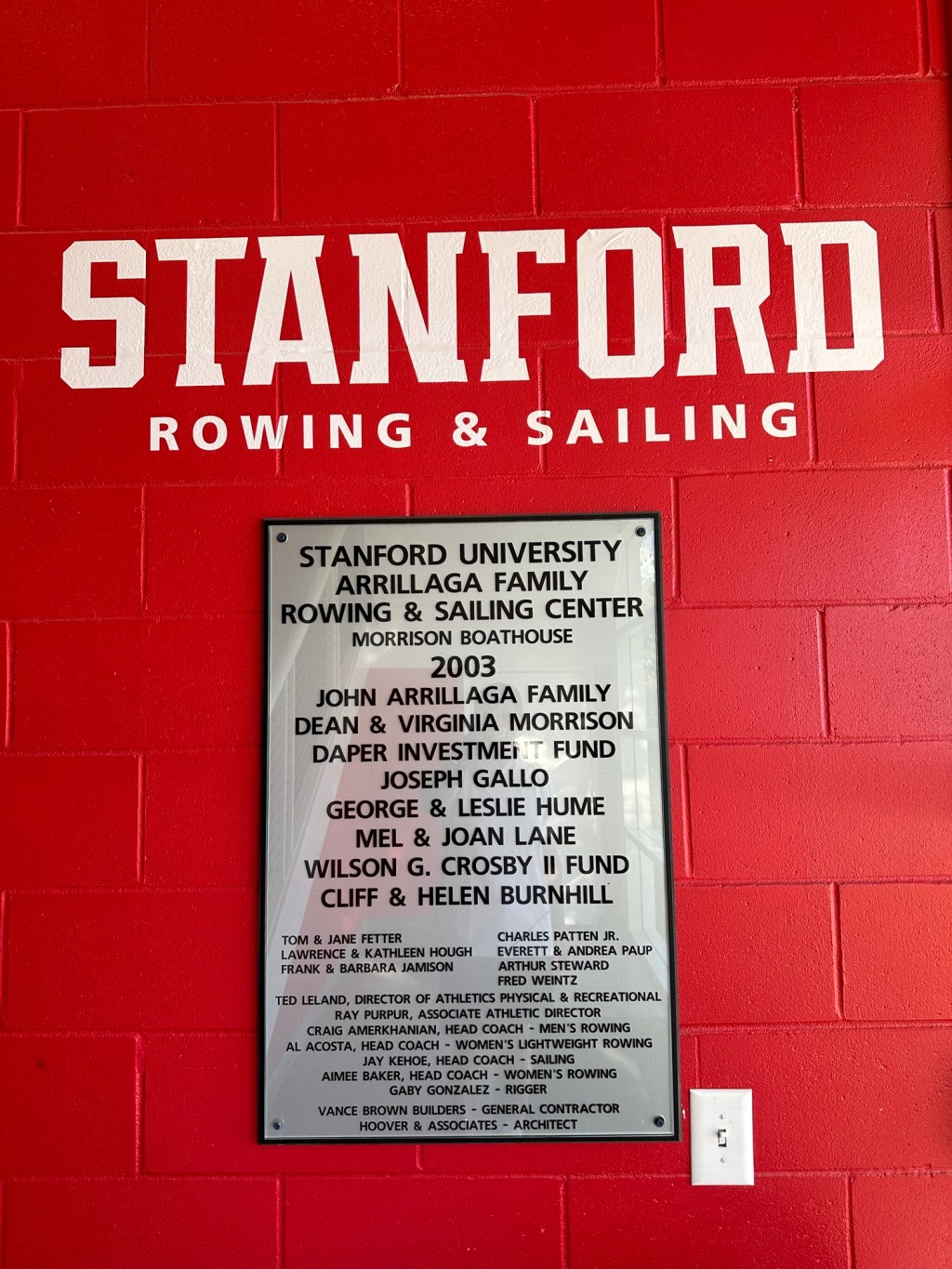
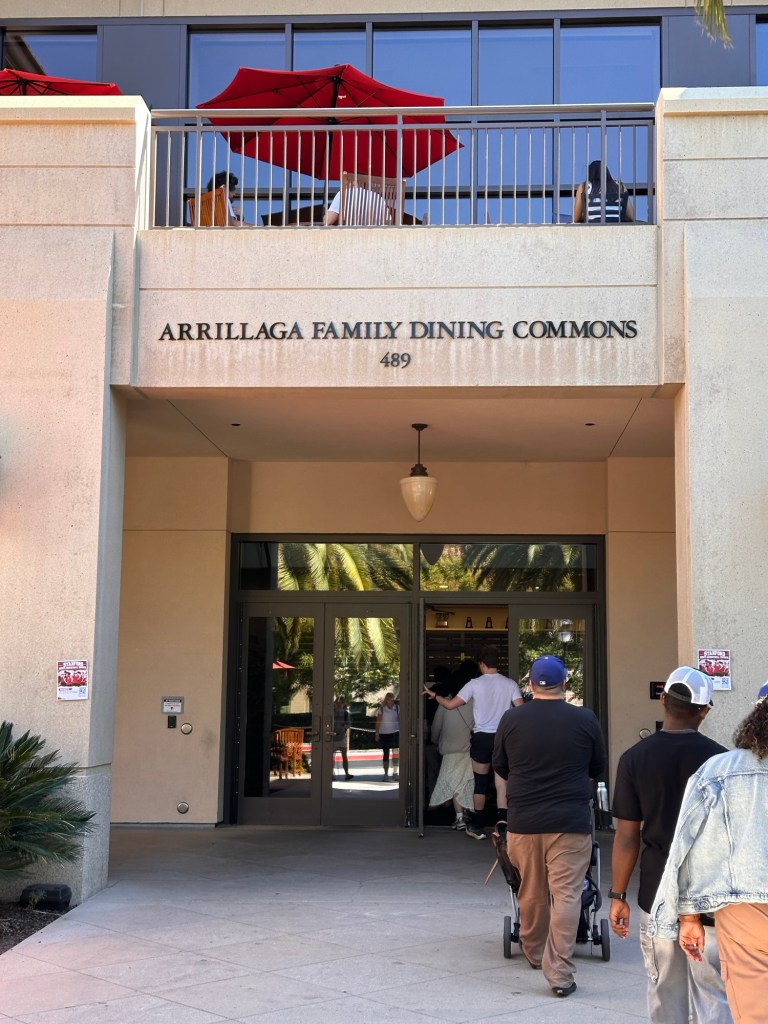
As we visited different facilities around campus, one name kept appearing: Arrillaga.
The Arrillaga Family Sports Center. The Arrillaga Center for Sports and Recreation. Arrillaga Hall. The Arrillaga Rowing and Sailing Center.
And that caught my attention for a different reason.
Arrillaga is a Basque surname.
We are a small country, so when you come across a Basque surname thousands of miles from home, you notice it. I became curious about who the Arrillaga family were and how their name ended up on so many buildings at one of the world’s great universities.
The story took me to John Arrillaga.
Born in California in 1937 to a family of Basque and Croatian heritage, Arrillaga didn’t arrive at Stanford as a wealthy businessman. He arrived on a basketball scholarship.
Money was tight. While studying, he worked several jobs to support himself. He eventually captained Stanford’s basketball team and, after graduating, travelled to the Basque Country and played professional basketball in Bilbao.
Then he returned to California.
Together with Richard Peery, he began buying and developing land in the Santa Clara Valley. At the time, much of what we now call Silicon Valley was still orchards and farmland.
Their timing — and vision — proved extraordinary.
As the technology industry grew, the land around them became some of the most valuable commercial property in the world. Peery and Arrillaga built millions of square feet of offices for the companies that were transforming this part of California.
Arrillaga became a billionaire.
But perhaps the more interesting part of the story is what he did next.
He gave hundreds of millions of dollars back to Stanford.
Not simply by writing cheques, either. He became closely involved in projects across the university, particularly its sporting facilities. He helped transform Stanford’s athletic infrastructure and supported scholarships that allowed hundreds of students to study there.
Among those scholarship athletes were names such as Tiger Woods and Katie Ledecky.
Suddenly, all those Arrillaga signs I had been seeing today made sense.
There is something I like about the circle of the story.
A young man arrives at Stanford because sport gives him an opportunity.
He works his way through university.
He goes on to build something extraordinary.
And decades later, he uses part of what he has built to create opportunities and environments for the generations coming behind him.
Perhaps Bill Bryson was right.
Putting your name on a building certainly leaves something behind.
But maybe the most interesting legacy isn’t the name on the building.
It’s what happens inside it.


Leave a Reply