
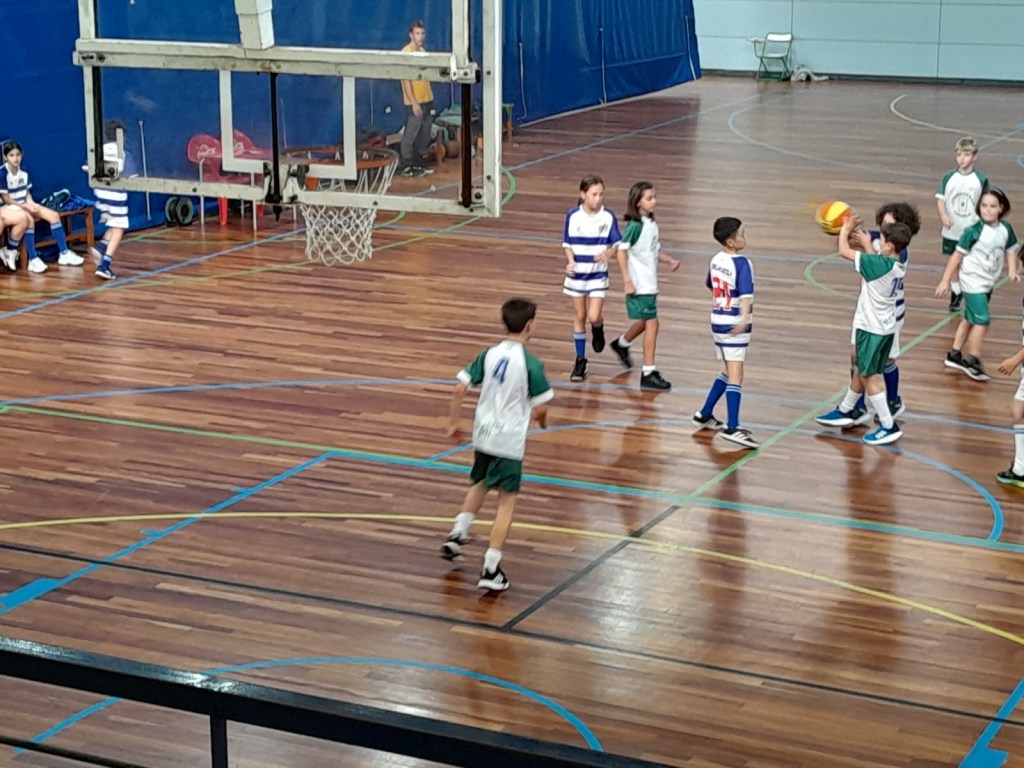
From time to time, my sister sends me pictures of my nephews playing all sorts of sports. Both boys love football, but the pictures are just as likely to show them playing handball, athletics, rugby or volleyball.
They take part in Eskola Kirola, the school sport programme in Gipuzkoa, the region where I’m from. It gives children the opportunity to experience different sports and activities rather than focusing on just one from an early age.
It has always struck me as an interesting approach. In a world where children are increasingly encouraged to join clubs, enter performance pathways and specialise in a particular sport at younger and younger ages, Gipuzkoa has developed a model based on a rather different starting point: give children the opportunity to experience sport before asking them to choose.
For many years, this philosophy was reflected in the rules themselves. Participation in the multi-sport programme, known as Multikirola, was a requirement for children who wanted to take part in certain club activities. If a child wanted to play football or basketball through a club, for example, they also had to participate in the broader school sport programme.
The intention was clear. No single sport should dominate a child’s sporting experience too early. Children should have the opportunity to try different activities, develop a range of skills, discover what they enjoy and, perhaps most importantly, experience the simple pleasure of playing sport.
The compulsory requirement was removed following a court ruling in 2025, but the philosophy behind the programme remains an important part of the conversation.
I like that philosophy. Not because every child needs to become a multi-sport athlete, or because playing several sports automatically produces better elite performers. But because childhood should offer opportunities to explore, not pressure to decide.
There is a difference between allowing children to discover a sport they love and asking them to commit to it before they have had the chance to discover much else.
A small territory with a remarkable sporting footprint
There is another reason why I find the Gipuzkoa example particularly interesting.
Gipuzkoa has a population of around 725,000 people, yet its representation in Olympic sport is remarkably high. Figures published by the provincial sports authorities indicate that it sends approximately 2.3 athletes per 100,000 inhabitants to the Olympic Games, compared with a Spanish national average of around 0.76.
In other words, its representation per head of population is roughly three times the national average.
Of course, this doesn’t prove that the school sport model is responsible. Sporting success is influenced by many factors: local culture, clubs, facilities, coaching, investment, family involvement and opportunities to participate.
But what I find particularly interesting is the question this raises about our understanding of sporting success.
We often look at successful athletes and try to identify the training methods, selection processes and development pathways that produced them. But perhaps we should also look further upstream. What kind of sporting culture did they grow up in? What opportunities did they have? How much freedom did they have to explore, experiment and discover their abilities? And what role did the wider environment play in shaping their relationship with sport?
It makes you wonder whether there is something worth understanding about the way sport is experienced and organised in this part of the Basque Country.
Designing the sporting environment
What makes the Gipuzkoa example interesting is that it moves the conversation beyond individual coaching decisions.
It is not simply about asking parents to encourage their children to try another sport, or asking coaches to be more patient. It is about the way the system is organised.
Schools, clubs, federations and local authorities all influence the sporting experiences available to children. They determine the competition calendar, the opportunities to participate, the age at which club pathways begin and, often, the expectations placed on young athletes.
These decisions matter.
If the system rewards early commitment to one sport, children and parents will respond accordingly. If selection and competition structures encourage specialisation, coaches will feel pressure to specialise. Even when everyone agrees that long-term development matters, the environment can push them in the opposite direction.
Gipuzkoa’s approach has traditionally tried to address this by putting multi-sport participation at the centre of its school sport model. The emphasis is on participation, learning and experiencing different activities, rather than making early performance the main objective.
That is an important distinction. We often talk about developing the whole athlete, but do we create environments that allow children to develop as whole people first?
The removal of the compulsory requirement also raises an important question: should a sporting system be able to require children to experience multiple sports, or should that be a choice for families?
I can see both sides. The intention behind Multikirola is educational and developmental, but making participation compulsory is a different matter. Children and families should have a say in the activities they choose.
I don’t think the answer is necessarily to make one model compulsory. Nor should we assume that every child wants to play several sports. Some will find their passion early, and that should be respected.
The challenge is to make sure that choosing one sport is a genuine choice, rather than a decision driven by selection pressure, parental anxiety or the fear of falling behind.
Early exposure should be an opportunity, not an obligation.
What can other sporting systems learn?
For me, there are three important lessons.
First, we need to give children access to a broad range of sporting experiences. Different sports offer different movement challenges, skills, social experiences and ways of competing. They can help children discover what they enjoy and develop abilities that may be useful well beyond any one sport.
Second, we need to look beyond the individual athlete and consider the system around them. Competition calendars, club structures, school programmes and talent pathways should work together rather than compete for a child’s time and commitment.
And finally, we need to be patient. Not every talented child needs to be identified, selected and placed on a specialised pathway as early as possible. There is value in allowing young people to develop at different rates, discover their interests and build the foundations that might serve them later in life.
I have spent much of my career in high-performance sport. I understand the pressure to find talent, improve performance and prepare athletes to win. But I also believe that our responsibility starts long before an athlete enters a performance programme.
Gipuzkoa doesn’t provide a formula for producing Olympic athletes, and we shouldn’t claim that its school sport model explains its success. But it does offer an interesting example of what can happen when a sporting culture makes room for broader experiences. It challenges us to think differently about the foundations of a successful sporting system.
Perhaps we should spend less time asking how early a child can specialise and more time asking what kind of sporting experiences we want them to have while they are growing up.
Because the purpose of youth sport should not simply be to produce tomorrow’s champions. It should be to give more children the opportunity to enjoy sport, develop their abilities and discover what they are capable of.
And if some of them go on to become champions, all the better.
But let’s not make that the price of a sporting childhood.


Leave a Reply