
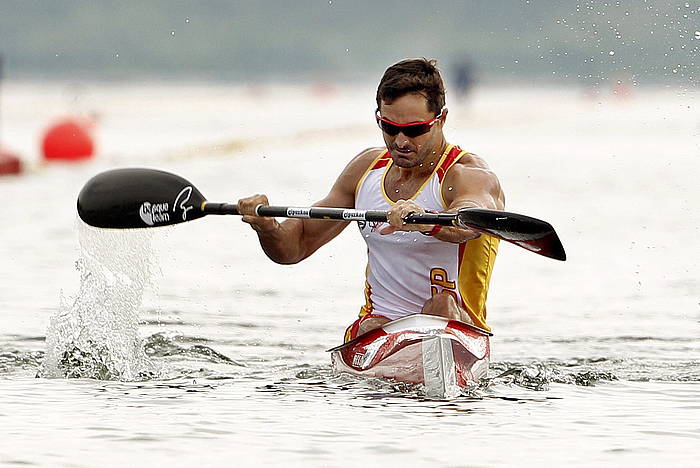
When I was a youngster, I competed almost every weekend, sometimes in two different sports. Football, athletics and canoeing. Eventually, I chose canoeing.
From March to September, I raced most weekends over different distances: river races, 3ks, 5ks, 200m, you name it. From October to March, we regularly did time trials and performance tests to benchmark our progress, whether running, swimming or in the gym.
As I progressed to international competition, the number of races reduced significantly.
In many sports, international athletes might compete only five to ten times a year. That leaves valuable time to develop physiologically and technically. But it can also mean we spend so long preparing for competition that we forget to practise competing.
Competition is about more than executing a physical or technical plan. It also involves managing uncertainty, responding to mistakes, adapting when things do not go as expected and making decisions under pressure.
We cannot reproduce everything that happens in competition. But we can create experiences in training where athletes face challenges, make mistakes, reflect and try again before the stakes are highest.
That might mean changing the conditions of a session, introducing an unexpected challenge, adding pressure or asking athletes to respond when the original plan is no longer working.
The same applies when a session goes wrong. Missing a target does not mean the session has lost its value. We can adapt, learn and continue with a different objective. Sometimes, stopping is the right call. The skill is knowing the difference.
The aim is not to make every session harder or to turn every training day into a competition. It is to recognise that we are developing more than physical and technical abilities. We are also rehearsing how we respond when things become difficult.
The less frequently we compete, the more deliberately we may need to create opportunities to practise those responses in training.
Because we cannot expect athletes to learn everything about competing on the day it matters most.
Are we practising not only how to perform when things go well, but how to respond when they do not?


Leave a Reply