

The other day, my flight home was delayed.
At first, like most people, I saw it as an inconvenience. But sometimes unexpected moments give us something we didn’t know we needed. With a little extra time on my hands, I caught up on some work, read a few more pages of a wonderful book I had been recommended, Theo of Golden, and found myself scrolling through the results of the Spanish National Championships.
Then I came across a result that made me stop.
Not because of the medal.
Not because of the names.
But because of the story behind it.
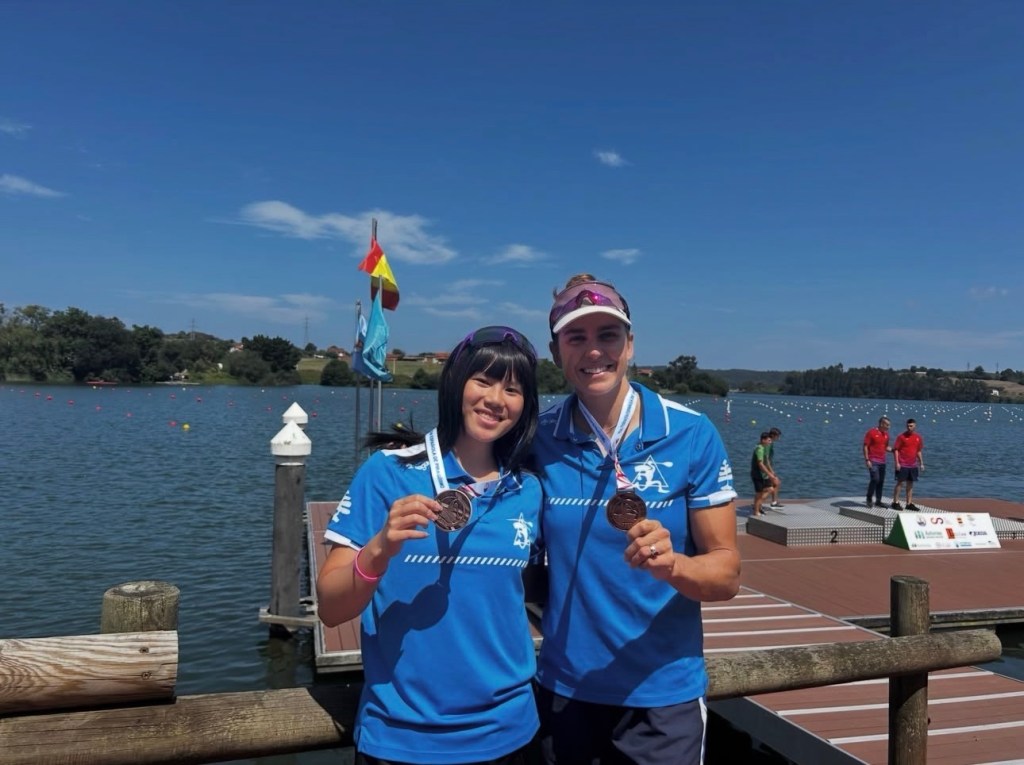
🥉 Begoña Lazkano – Itxaro Zumarraga. Inclusive K2. Bronze medal.
At first glance, it looked like another podium finish.
It wasn’t.
It was a reminder of everything sport can be when we get it right.
Last week, I returned to where it all began.
I slipped my kayak into the water at Donostia Kayak and paddled alongside one of my oldest friends, my former K2 partner and now the club’s president, Imanol Burguera. Some things had changed over the years. Most hadn’t.
The rhythm of the paddle was still familiar. So were the conversations.
There is something about sharing a boat with someone who has travelled thousands of kilometres beside you that takes you back to the person you once were.
While we were on the water, our club was competing at the Spanish National Championships in Asturias. Like many former athletes, I found myself checking the results throughout the weekend.
Our first Olympian, Begoña Lazkano, was racing her usual events in the K1 and K2. But one result made me stop scrolling.
Begoña Lazkano – Itxaro Zumarraga. Inclusive K2. Bronze medal.
At first glance, it was just another podium finish.
It wasn’t.
Only a few months ago, Itxaro, just sixteen years old, was fighting osteosarcoma. Cancer changed her life forever and left her with a physical impairment. For many young athletes, that would have marked the end of their sporting journey.
Instead, it became the beginning of a different one.
Through paracanoe, she found another way to do what she loved most: paddle.
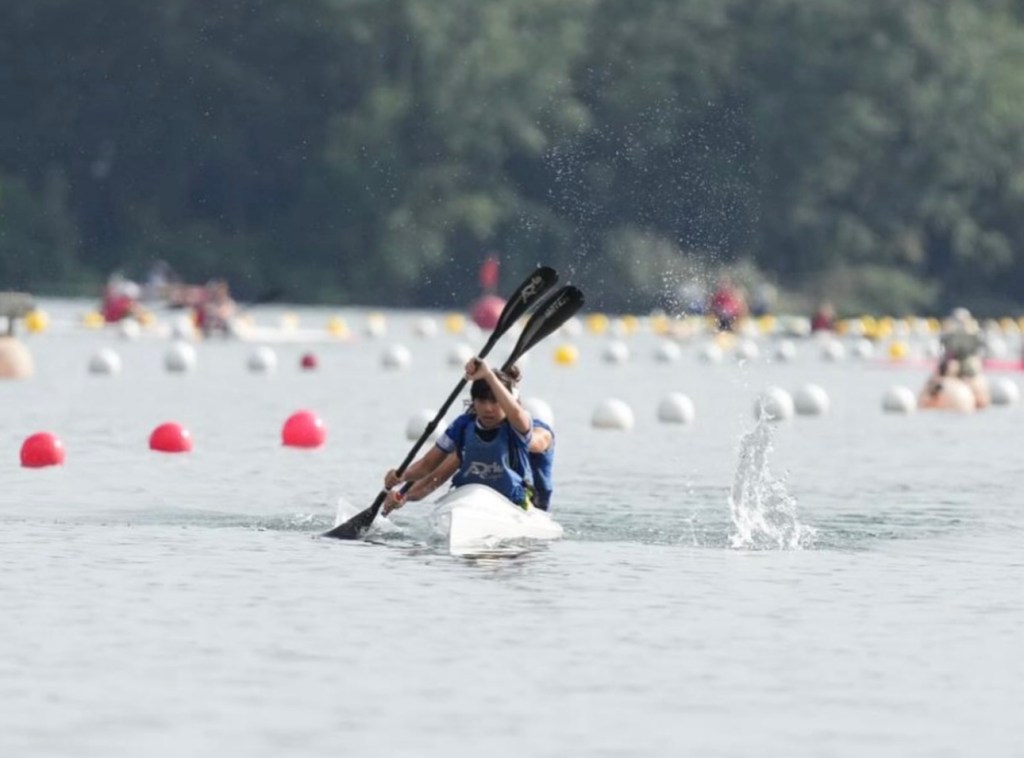
And this weekend, she didn’t simply take part. She raced at the Spanish National Championships. She finished fifth in the KL3 200 metres, sixth in the KL3 500 metres, and stood proudly on the podium after winning bronze in the Inclusive K2 alongside an Olympian.
Those are results worth celebrating.
But they are not the reason this story matters.
What stayed with me wasn’t the medal.
It was the boat.
An Olympian and a sixteen-year-old recovering from cancer, racing together.
Not in separate competitions.
Not in parallel pathways.
In the very same boat, chasing the same finish line.
We talk a lot about inclusion in sport.
We write strategies. We develop programmes. We create policies.
All of that is important.
But sometimes inclusion is much simpler than we make it.
Sometimes it looks like two athletes sharing a boat.
I also found myself thinking about Begoña’s decision to race that event.
She didn’t have to.
She could have focused entirely on her own Olympic disciplines. She could have decided that her priorities were elsewhere.
Instead, she chose to be part of something bigger than herself.
She understood that leadership isn’t only about standing on podiums.
Sometimes it is about using your position to help shape the culture of your sport.
Without making a speech.
Without seeking recognition.
Just by showing up.
Then I thought about Donostia Kayak.
Clubs often measure success by medals, national titles or Olympians.
Those achievements matter, and my club has every reason to be proud of them.
But perhaps the greatest legacy of a club is something less visible.
It is whether every athlete feels they belong.
Whether, when life throws its toughest challenges at them, the answer isn’t:
“Your journey ends here.”
But instead:
“Let’s find another way.”
As someone fortunate enough to work in both Olympic canoe sprint and paracanoe, I have come to believe that we sometimes create a false choice between performance and inclusion.
There isn’t one.
The highest-performing environments are built on high standards, but they are sustained by something even more powerful:
Belonging.
Athletes perform at their best when they know they are valued not only for what they achieve, but for who they are.
That is the culture we should all be trying to build.
A culture where ambition and humanity are not competing forces.
Where excellence and inclusion strengthen each other.
Where every athlete understands that they have a place.
As I paddled back to the club with Imanol, I realised that, despite everything that has changed in our sport, the things that matter most haven’t changed at all.
Sport has always been about people.
The coaches who believe in us before we believe in ourselves.
The teammates who make us better.
The clubs that refuse to let adversity have the final word.
We often say that sport changes lives.
Sometimes it does because of medals.
More often, it does because of people.
An Olympian who chooses to share a boat.
A club that opens another door instead of closing one.
A sixteen-year-old who reminds us that courage isn’t always about winning.
Sometimes, courage is simply having the strength to get back on the water.
Because in the end, the greatest legacy of any club isn’t measured by the champions it produces.
It is measured by the people who never stop believing they still have a place in it.


Leave a comment