
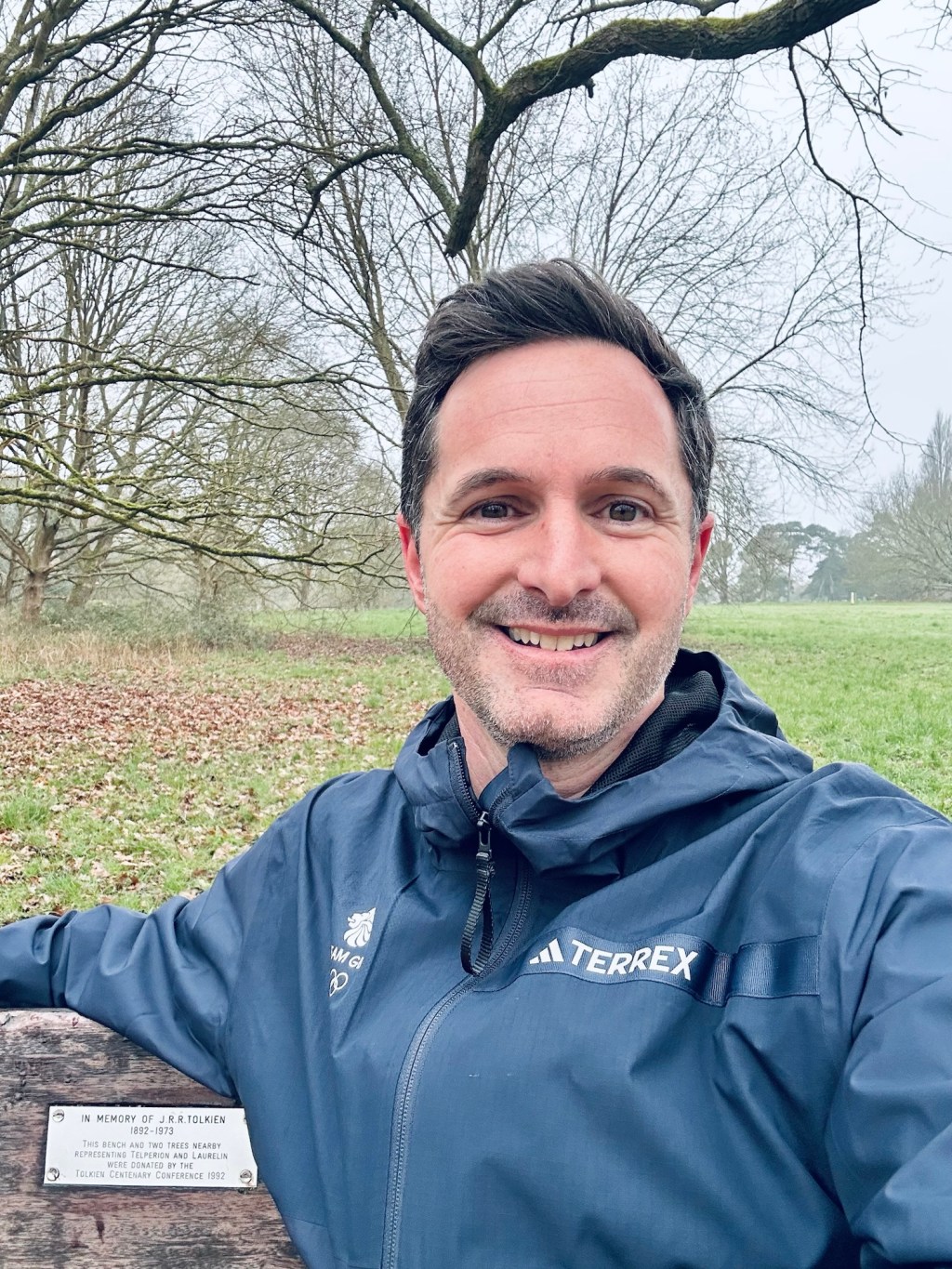
Today, I needed the pavement under my feet. Last night brought the sort of news that shakes one’s world: my cousin is in hospital, his condition critical.
When life feels fractured, there is a particular, desperate clarity to be found in the steady thrum of a run, a way to outpace, if only for an hour, the heavy weight of the unknown. I ran toward the University Parks, seeking a place in Oxford that has so often served as an anchor.
I often find myself tracing the winding veins of these parks, not in pursuit of a specific goal or a rigid training programme, but for the restorative rhythm of the movement itself. It is a pursuit of mental health rather than athleticism. There is a liberating lack of ambition in my stride; I run for the ‘general fitness’ of the soul, a routine that grants me the freedom to stop and breathe whenever the mood strikes, without the lingering guilt of an unfinished set.
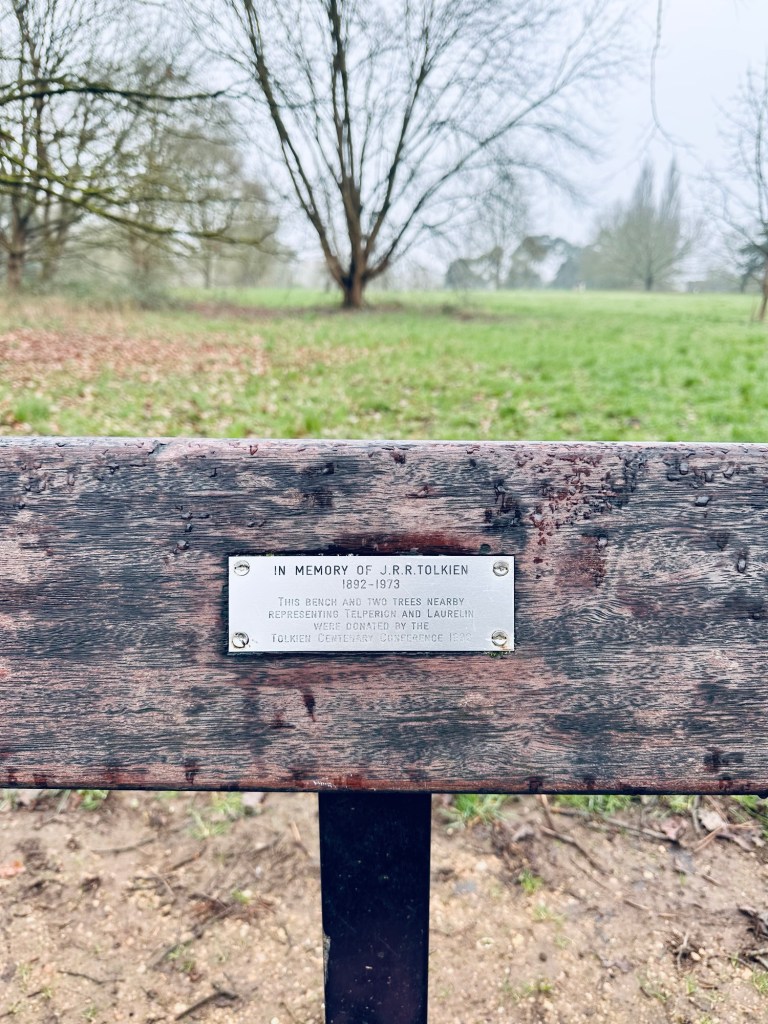
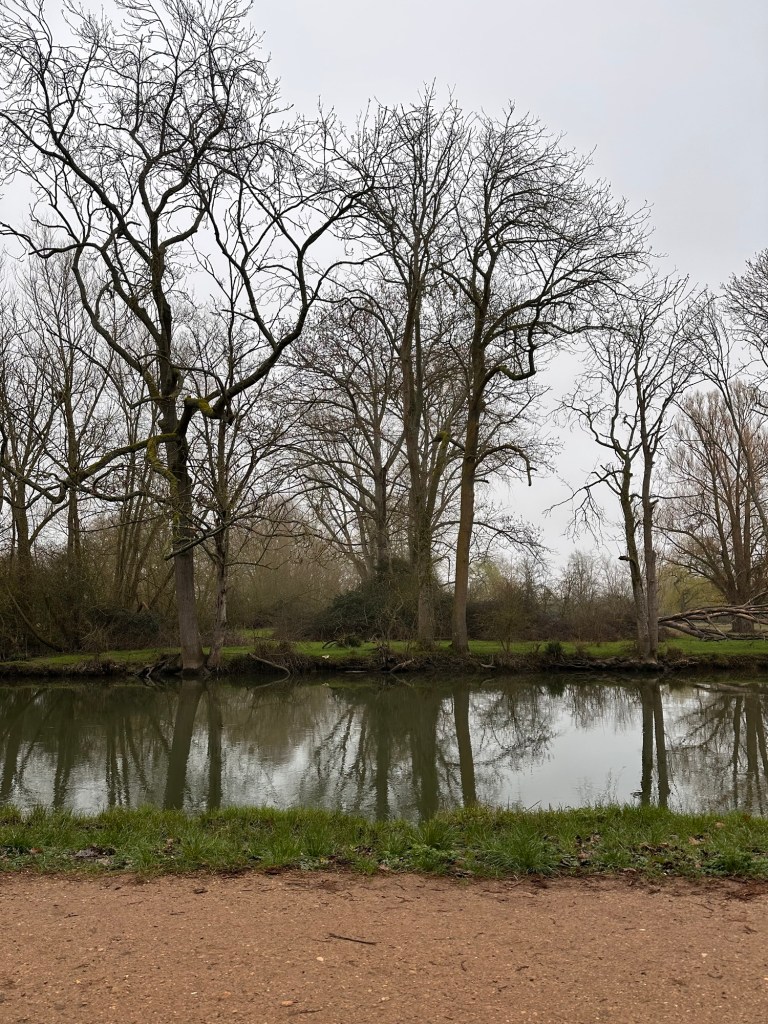
Yet, there is one stop that has become a mandatory station of the cross, a secular pilgrimage. Tucked near the banks of the River Cherwell, there sits a bench dedicated in honour of J.R.R. Tolkien. I pulled up there this morning, catching my breath while watching the slow, grey-green glide of my favourite English river. Sitting there, reflecting on the fragility of a young life in a hospital bed, I felt the weight of the man to whom this bench belongs, a man whose philosophy was built on a defiant moral backbone: the conviction that what we do, no matter how small, actually matters.
A legacy forged in loss
To sit on that bench is to sit with the weight of a remarkable, often tragic, personal history. Tolkien’s life was not one of ivory-tower ease; it was a series of choices made in the face of profound grief. Orphaned by the age of 12 – his father dying when he was three, his mother, Mabel, when he was a young boy – Tolkien grew up with little money but a towering sense of duty.
He viewed his mother’s struggles and her eventual death as a sacrifice for her faith, a debt he felt he must repay by living a life of meaning. This was the genesis of his philosophy: a sense of responsibility to honour what has been received. In Tolkien’s world, goodness is not a passive state; it is a debt of honour paid forward to the future.
The fellowship of the trenches
Long before the Fellowship of the Ring, there was the TCBS, the Tea Club and Barrovian Society. This was a tight-knit circle of school friends who shared a wildly ambitious goal: to change the world through art, poetry, and beauty.
Then came 1916 and the Battle of the Somme. The war did not just interrupt their mission; it decimated it. Tolkien watched as his closest friends were swallowed by the mud of France. He survived only because he contracted trench fever and was sent home. He didn’t view his survival as mere luck, but as a mandate. He felt he had to carry the creative torch for the friends who never returned. The ‘Fellowship’ was never just a literary device; it was an echo of a lost brotherhood, a testament to the idea that our creative output is a way of keeping the dead alive.
The power of the small
Perhaps the most enduring element of Tolkien’s work, and the most relevant to those of us simply trying to navigate a chaotic world, is his focus on the ‘ordinary’. In an era of Great Men theories of history, Tolkien looked to the gardener.
‘Even the smallest person can change the course of the future’, Gandalf famously tells Frodo. This wasn’t naive sentimentality. Tolkien had seen in the trenches that the most gargantuan historical events often hinge on the quiet courage of individuals who would rather be at home in their gardens. It is why the fate of Middle-earth rests not with a king or a powerful wizard, but with Samwise Gamgee, a man whose primary virtue is that he refuses to abandon his friend.
Beauty as a moral act
For Tolkien, creating was a form of ‘sub-creation’. He believed that because God created the world, humans participate in that divine work whenever they add beauty, story, or music to it. This explains the staggering depth of his world-building. The languages, the maps, the millennia of history weren’t just hobbies; they were a moral attempt to make the world more beautiful.
He found the strength for this monumental task through community. At the Eagle and Child pub in Oxford, he gathered with ‘The Inklings’, – including C.S. Lewis – to read drafts and exchange critiques. It is a reminder that even the most solitary of geniuses requires the nourishment of friendship to see a vision through to the end.
Hope without naivety
Tolkien was a man who had seen the worst of humanity, yet he rejected cynicism. He coined the term ‘eucatastrophe’, the sudden, joyous turn toward the good when all seems lost. It is not the same as a ‘happy ending’; it is a hard-won glimmer of hope that emerges precisely because the darkness is so real.
As I sit on his bench and watch the Cherwell, I’m reminded that Tolkien’s ‘mythology for England’ was really a manual for living. It teaches us that duty is a form of love, that friendship is a creative force, and that in a world of sprawling shadows, the most radical thing we can do is to keep planting our gardens and telling our stories.
Because, in the end, what we do actually matters.
 EKAITZ SAIES
Leave a comment