
As part of my new project, The Champion’s Diary, I will share some exciting recipes designed for athletes.
There’s a word from my mother tongue, Euskara—the oldest living language in Europe—that I’ve carried with me all my life.
That word is sasoiko.
It means two things at once: strong, full of life, at your best—and of the season, connected to the time and place you live in. For me, it perfectly captures two lifelong passions: the extraordinary potential of the human body, and the power of fresh, seasonal food.
Because from the very beginning, food and movement have always gone hand in hand.
For thousands of years, humans moved to eat. We walked, ran, climbed, fought and worked—and food restored us. It made us stronger, faster and more resilient. Long before supplements and sports drinks, nourishment came straight from the land, arriving exactly when the body needed it most.
That connection still lives on today, nowhere more clearly than in sport. Athletes don’t just eat for pleasure—we eat to fuel performance, to recover, and to come back stronger tomorrow.
I come from San Sebastián, a city that takes food very seriously. Every year on the 20th of January, during the feast of our patron saint, half the city dresses up as chefs. It’s also one of the cities with the highest number of Michelin stars per person in the world. Cooking isn’t a hobby where I’m from—it’s part of who we are.
Food runs deep in my family. My great-grandmother cooked in a well-known restaurant of her time, and two of my uncles carried that passion into their own ventures.
My love for seasonal produce comes from my father and his garden. Few things beat picking a warm tomato straight from the vine, dressing it with olive oil and salt, and eating it on the spot. Simple. Honest. Perfect.
I’ve been lucky. I spent more than 15 years as an elite athlete, followed by over a decade working in high-performance sport as a Performance Director in Spain and the UK. Those years took me around the world and into countless kitchens—athletes’ homes, team hotels, roadside cafés and top restaurants alike.
To some people, seasonal eating is about flavour—and that’s true.
But to an athlete, it’s about something even more powerful: timing.
Your body is not the same in December as it is in July. Training changes. Intensity changes. Recovery needs change. So why wouldn’t your food?
This isn’t about strict rules or complicated science. It’s about using what nature gives us, when it gives it to us, to support how we train and how we live.
I’ve spent enough time in locker rooms to know the reality: after a hard session, the last thing you want is a complicated recipe and a sink full of dishes. You want food that looks great, tastes incredible, and actually helps your body recover—without draining the last bit of energy you’ve got left.
That’s why I want to share some simple, yet effective recipes.
My intention is to share a collection of recipes, a practical way of cooking for real athletes and real lives. Food that supports performance, respects the seasons, and brings genuine joy back into the kitchen.
That is the art of being sasoiko and eating like a Champion:
food that is full of life, perfectly timed, and the best fuel to perform and recover at your best.
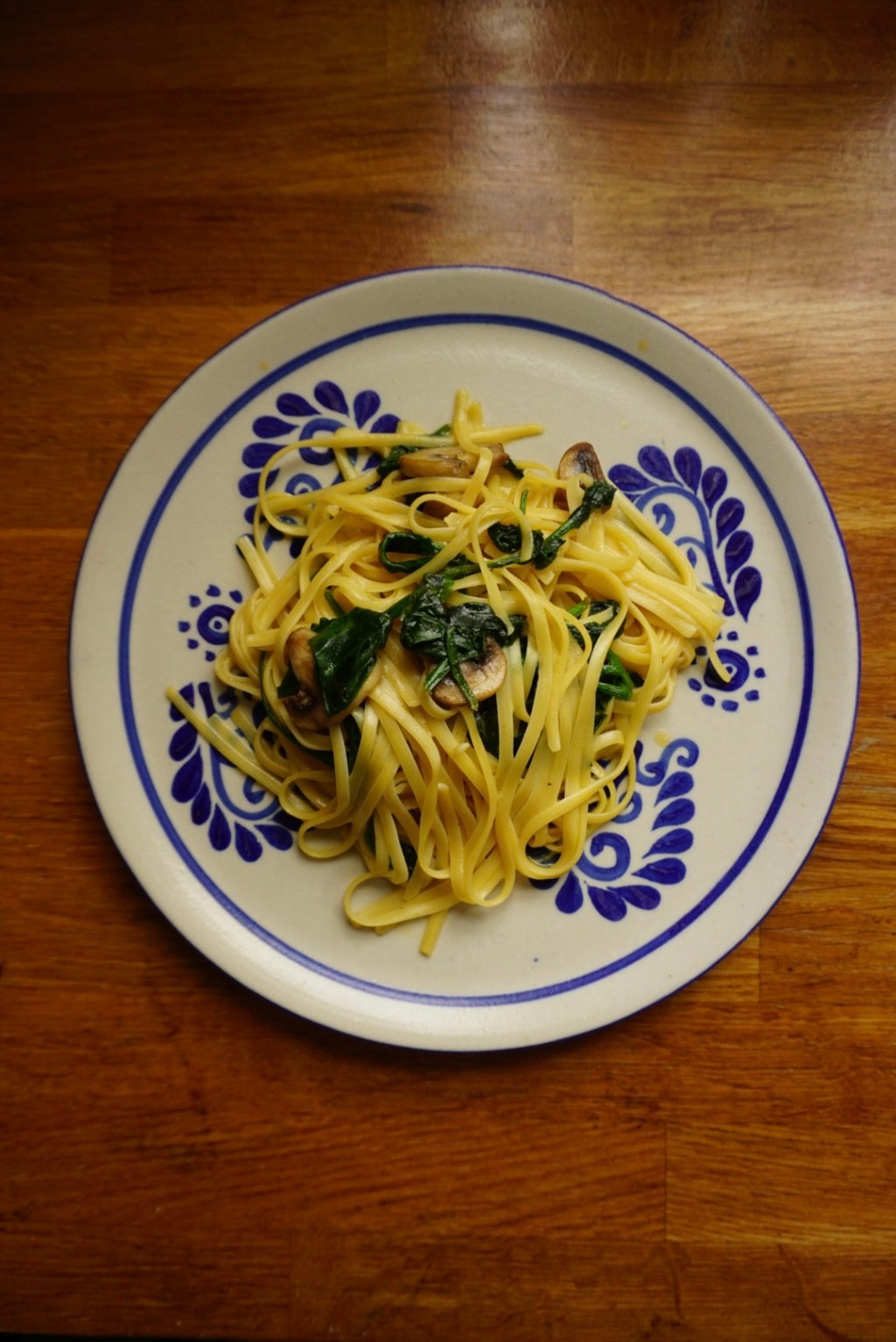
This first dish is called, “The Earth & Iron Carbonara”, a masterclass in functional elegance. By centering the dish on the synergy between nitrate-rich greens and umami-dense fungi, we create a high-performance fuel that is exceptionally gentle on the digestive system.
Serves: 2 | Prep time: 5 mins | Cook time: 12 mins
The ingredients
- 200g Linguine: The flat, ribbon-like structure provides the ideal surface area for the silky egg emulsion to “grip.”
- 250g Closed Cup Mushrooms: Cleaned and sliced (A vital source of Vitamin D and Selenium for immune support).
- 200g Fresh Baby Spinach: Packed with Nitrates to support blood flow and mitochondrial efficiency.
- 3 Large Egg Yolks + 1 Whole Egg: The “Gold Standard” for bioavailable protein and essential phospholipids.
- 60g Pecorino Romano or Parmesan: Finely grated (Provides high-quality calcium and necessary sodium for electrolyte replenishment).
- Extra Virgin Olive Oil: For a dose of anti-inflammatory monounsaturated fats.
- 1 tsp Freshly Cracked Black Pepper: Contains piperine, which can aid in nutrient absorption.
The method
- The Pasta: Submerge the linguine in a large pot of boiling, heavily salted water. Cook until al dente. This firm texture ensures a lower Glycemic Index (GI), providing a steady, prolonged release of glucose into the bloodstream.
- The Umami Sear: Heat 1 tbsp of olive oil in a large skillet over high heat. Add the sliced mushrooms in a single layer. Do not stir. Let them sear undisturbed for 2–3 minutes until they develop a deep golden-brown crust, then toss and finish for another 2 minutes. This “dry” sear concentrates their natural minerals.
- The Iron Wilt: Toss the baby spinach into the pan with the mushrooms. It will collapse into vibrant green ribbons in about 60 seconds. Once wilted, turn the heat to the lowest setting.
- The Emulsion Base: While the vegetables cook, whisk the eggs, cheese, and a generous amount of black pepper in a small bowl until it forms a thick, pale paste.
- The Marriage: Reserve a mug of the starchy pasta water (the “liquid gold” of performance cooking), then drain the linguine. Add the hot pasta directly to the pan with the vegetables. Turn the heat OFF completely.
- The Finish: Pour the egg and cheese mixture over the pasta. Add a splash of the reserved pasta water. Use tongs to twirl the linguine rapidly. The residual heat of the pasta will “cook” the eggs into a silky, glossy sauce without scrambling them. Add more water as needed until the linguine is perfectly coated in a Michelin-level sheen.
The performance sidebar: Why it works
- Mitochondrial Optimization: The nitrates in the spinach act as a natural vasodilator. By relaxing the blood vessels, they improve the efficiency of the Electron Transport Chain within your mitochondria, allowing you to produce more energy (ATP) with less oxygen expenditure.
- Muscle Protein Synthesis (MPS): The high concentration of Leucine in the egg yolks acts as the molecular “switch” to initiate muscle fiber repair immediately after your training session.
- Digestive Speed: This recipe is formulated for high “Gastric Emptying” speed. It moves through the system efficiently, making it an excellent choice for a high-carb meal that won’t leave you feeling sluggish.
The athlete’s shortcut
If you have a high-intensity session after lunch, use White Linguine rather than wholewheat. The lower fiber content in the white version allows the carbohydrates to be absorbed even faster, topping up your muscle glycogen stores more efficiently.
 EKAITZ SAIES
Leave a comment