
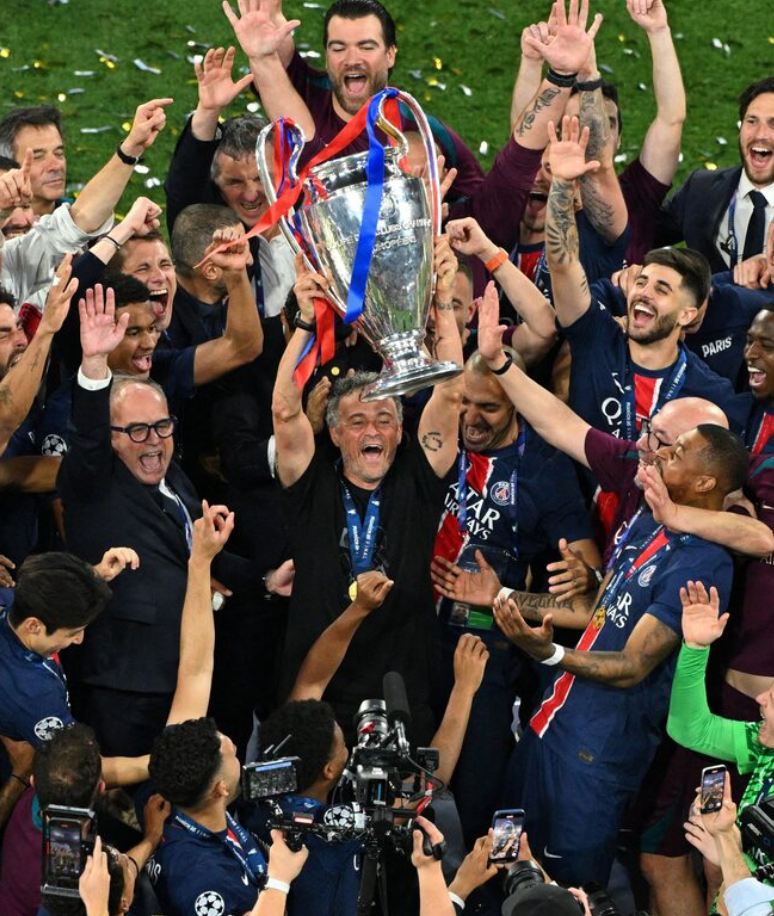
Every time I watched a PSG match this season, I found myself drawn in immediately by the sheer intensity they brought from the first whistle. There was no easing into the rhythm, no waiting for the game to open up. Under Luis Enrique, PSG attacked with a purpose that was obvious from minute one. It felt like every kickoff was the start of a sprint. You could see it: the pressing, the positioning, the collective hunger. And you could feel it: this was clearly a team coached to dominate early, not just eventually.
In the chaotic, high-stakes theatre of the Champions League, where one lapse can derail a season, few things are more precious than clarity of purpose. Luis Enrique’s Paris Saint-Germain—long perceived as a mercurial collection of talent—finally found that clarity in 2025.
Across Europe’s elite stages, PSG made a habit of doing something that top teams talk about but rarely achieve: they started fast. Not metaphorically, but literally. In nine Champions League matches in 2025, PSG scored their opening goal within the first 15 minutes four times. That’s 44% of knockout-phase games with a breakthrough before the quarter-hour mark. The average first goal in UCL matches lands between the 25th and 35th minute. PSG, in contrast, often didn’t wait that long to set the narrative.
PSG’s First Goals in 2025 Champions League Matches
| Match | First Goal Minute |
|---|---|
| vs Arsenal (1st leg) | 4′ |
| vs Arsenal (2nd leg) | 27′ |
| vs Liverpool (2nd leg) | 12′ |
| vs Inter Milan (Final) | 12′ |
| vs Stuttgart | 6′ |
| vs Man City | 56′ |
| vs Brest (1st leg) | 21′ |
| vs Brest (2nd leg) | 20′ |
| vs Liverpool (1st leg) | – (no goal) |
This wasn’t incidental. It was a byproduct of Enrique’s high-octane blueprint: a pressing system designed not just to harass, but to suffocate; an attacking formation with overlapping fullbacks and wide forwards rotating into half-spaces; and a team mentality summed up in his now-iconic mantra: “11 attackers, 11 defenders.”
Ousmane Dembélé—once criticised for inconsistency—became emblematic of this transition. Deployed variously as a wide forward and an inverted runner, he opened scoring twice inside the first 12 minutes in key knockout ties. Achraf Hakimi’s 12th-minute opener in the final was similarly emblematic: composed, cutting, inevitable.
This deliberate urgency had psychological effects. Arsenal, the team I support in England, conceded in the fourth minute at the Emirates and never quite recovered. Inter Milan, unsettled by early PSG incursions, looked vulnerable from kickoff in the final. Luis Enrique’s game plan didn’t just value early dominance—it depended on it.
But it wasn’t just about early goals. It was about early control. Even when PSG didn’t score within 15 minutes, they controlled tempo and territory. Against Manchester City, another of my favourite teams, they scored their first in the 56th minute, but the groundwork had been laid from kickoff, forcing Guardiola’s side deeper and deeper until the dam broke.
What’s perhaps most striking is how seamlessly PSG blended technical brilliance with tactical discipline. This wasn’t a side that played on adrenaline alone. There was structure. There was patience. And above all, there was conviction, anchored in preparation. Luis Enrique’s attention to detail in the first 10 minutes of matches often mirrored the preparation seen in Olympic finals: routines honed in training, triggers rehearsed, scenarios run through.
You could see it in the way Vitinha orchestrated the press from midfield, or how Marquinhos stepped aggressively into midfield spaces in the opening exchanges. These weren’t improvisations. They were intentions.
The contrast with earlier iterations of PSG is stark. This was no longer a team that waited for Mbappé to deliver a moment of magic. This was a team that made things happen, with or without him. It speaks to a cultural shift, from reliance on individuals to trust in systems.
And this theme—of early momentum, of aggressive initiative—isn’t unique to football. In high-performance sport across disciplines, the first moments of a contest often determine outcomes. Think of sprinters exploding out of the blocks, of Novak Djokovic breaking serve in the opening game, of All Blacks rugby sides delivering their most punishing blows within the first quarter. Early dominance has physiological benefits—establishing rhythm, reducing cortisol spikes—and psychological ones: it imposes doubt, disrupts preparation, and tilts belief.
Elite athletes and coaches know this. They train for it. They simulate hostile starts in practice to master the art of not just weathering intensity, but applying it. PSG under Luis Enrique did exactly that.
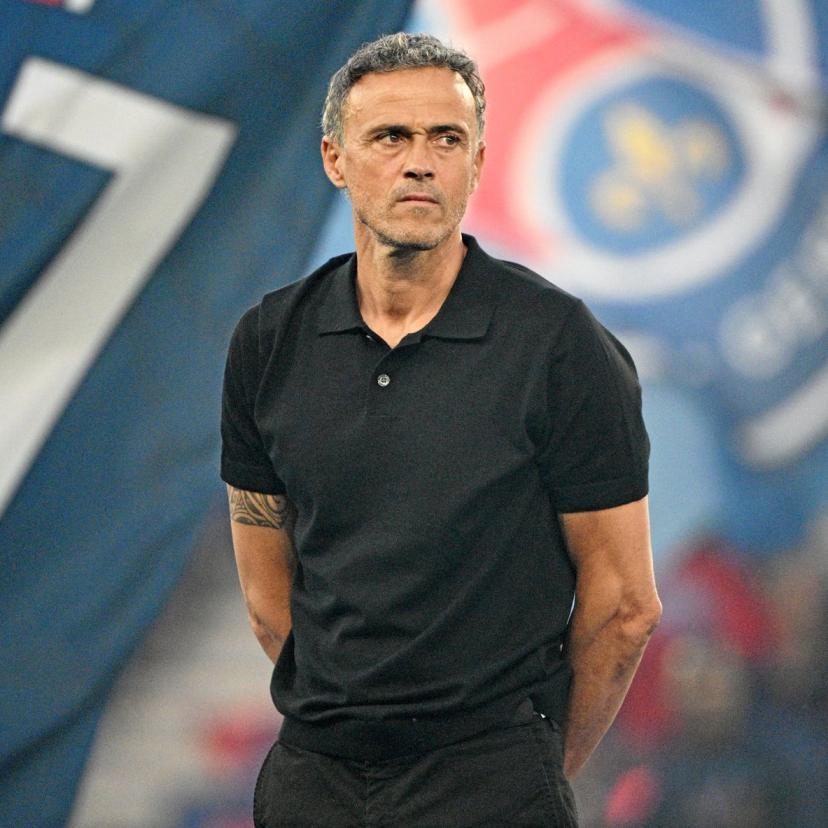
Luis Enrique’s PSG didn’t just evolve tactically. They matured emotionally. They stopped waiting. They stopped reacting. Instead, they started. And in a game defined by moments, they chose to create the first one.
In a football culture often obsessed with dramatic comebacks and second-half masterclasses, PSG reminded us of something simple and powerful: sometimes, it’s best to strike first.
 EKAITZ SAIES
Leave a comment