
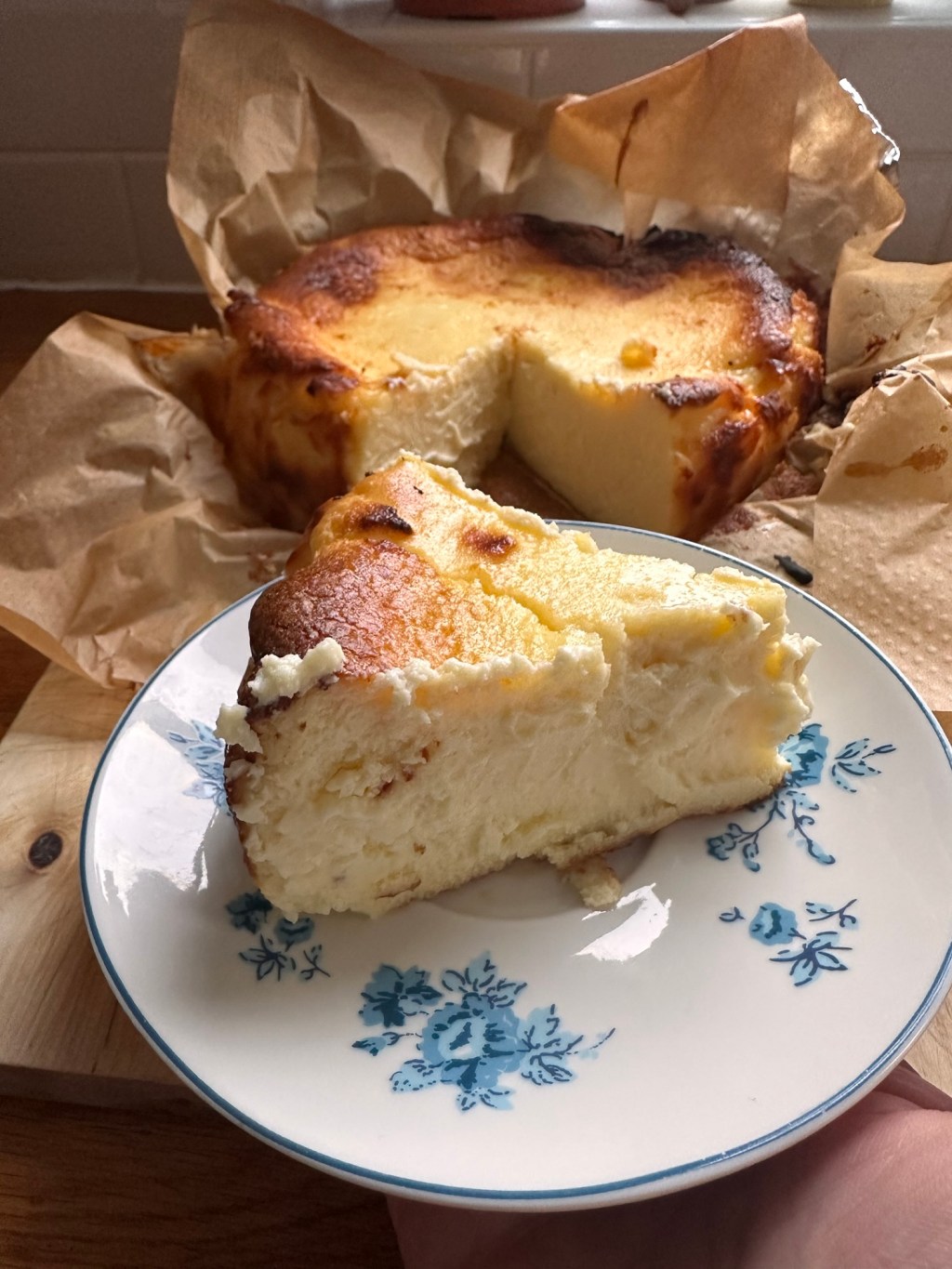
This post is a bit of a departure from my usual content on high-performance sport and leadership, but after I shared a video on Instagram of the Basque cheesecake I made to celebrate my son’s birthday, many of you messaged me asking for the recipe – so I’m happy to share it with everyone here.
Some years ago, a friend of mine – a Danish physics professor living in San Sebastián with his family – invited my wife, children, and me to dinner at their home. For dessert, he served the famous Basque cheesecake from La Viña, a traditional bar in San Sebastián. Being a true scientist, he had perfected the baking process to recreate the cake exactly, both in flavour and appearance. I never managed to get his recipe, but fortunately, I got one later from another friend.
This was quite some time ago, but thanks to social media, the cake has recently gone viral.
If you’re in the UK, you might have seen Strictly Come Dancing judge Anton Du Beke enjoying it with his friend Giovanni. There’s even a cake shop in London that sells almost nothing else – and on weekends, the queue often goes around the corner.
Originating from the heart of San Sebastián’s Old Town, within the walls of the renowned La Viña bar, this recipe brings you the iconic Basque cheesecake, also known as ‘Tarta de Queso.’ Created by Santiago Rivera in 1988, this crustless wonder has captured the hearts and palates of people worldwide. Its signature ‘burnt’ exterior and irresistibly creamy interior make it a dessert unlike any other. This is not your typical cheesecake; it’s a testament to simple ingredients and bold baking, resulting in a uniquely delicious experience. Enjoy a taste of the Basque Country with this authentic recipe.
Ingredients:
* 1 kg cream cheese (like Philadelphia), at room temperature
* 350-400 g caster sugar
* 480-500 ml double cream, at room temperature
* 5-7 large eggs, at room temperature
* 30 g (1 tablespoon) plain flour (optional, helps to stabilise slightly)
* A pinch of salt (optional)
Method:
* Preheat the oven: Preheat the oven to 200-220°C (400-430°F), top and bottom heat (without the fan if possible). The high temperature is key to achieving the burnt exterior.
* Prepare the tin: Generously grease a round springform cake tin, approximately 20-26 cm in diameter. Line the inside completely with baking parchment, ensuring it overhangs the edges by about 5-7 cm. Don’t worry if the paper is crumpled; this gives it a characteristic rustic look.
* Mix the ingredients:
* In a large bowl, beat the cream cheese with the caster sugar until smooth and lump-free. You can use an electric whisk or do it by hand with a wooden spoon or a wire whisk.
* Add the eggs one at a time, beating well after each addition until fully incorporated.
* Pour in the double cream and mix until the mixture is even.
* If using flour, sieve it over the mixture and gently fold it in with a spatula or whisk, avoiding over-mixing. Add the pinch of salt if using.
* Bake: Pour the mixture into the prepared tin. Bake for approximately 50-60 minutes, or until the top is well-browned, almost burnt, and the centre is still slightly wobbly. The time may vary depending on your oven. Keep an eye on the cheesecake from 45 minutes onwards to prevent it from burning too much.
My mother taught me a great trick: cover the top with tin foil for the last 10–15 minutes of baking to stop it from burning too much.
* Cool: Remove the cheesecake from the oven and allow it to cool completely at room temperature. Don’t worry if it deflates slightly as it cools; this is normal.
* Chill (optional but recommended): Although it can be eaten at room temperature, many recommend chilling the cheesecake for at least 2-3 hours (or even overnight) to allow the flavours to settle and the texture to firm up.
* Serve: Carefully remove the springform ring and peel away the baking parchment. Serve the cheesecake at room temperature or chilled. Traditionally, it’s served plain, without accompaniments, to appreciate its unique flavour.
Important tips:
* Ingredient temperature: It’s crucial that all ingredients are at room temperature for them to mix evenly and prevent lumps.
* Don’t over-mix: Mix the ingredients until just combined, but avoid over-mixing, especially after adding the flour (if using), to avoid incorporating too much air into the batter.
* The baking is key: Don’t be afraid of the dark colour on top. It’s what gives it its characteristic caramelised flavour.
* The centre should be soft: The centre of the cheesecake should be creamy and slightly wobbly when removed from the oven, as it will continue to set as it cools.
* Be patient when cooling: Don’t try to remove the cheesecake from the tin while it’s hot, as it will be very delicate. Allow it to cool completely before handling it.
On egin! (Enjoy it in Basque)
 EKAITZ SAIES
Leave a comment