
This week, I had the privilege of attending the ICF 2025 Paddle Summit in Hangzhou, China, as part of the Sprint Committee. It was an inspiring experience, filled with meaningful conversations with people who are deeply committed to our sport.
Many of the discussions were both necessary and constructive—highlighting the challenges ahead while also opening the door to exciting opportunities.
On Saturday afternoon, we visited the Fuyang Canoe Centre, a world-class venue that perfectly showcases the sport’s potential. Later, we took a boat tour, a fantastic way to experience the stunning surroundings and reflect on the conversations from the summit.
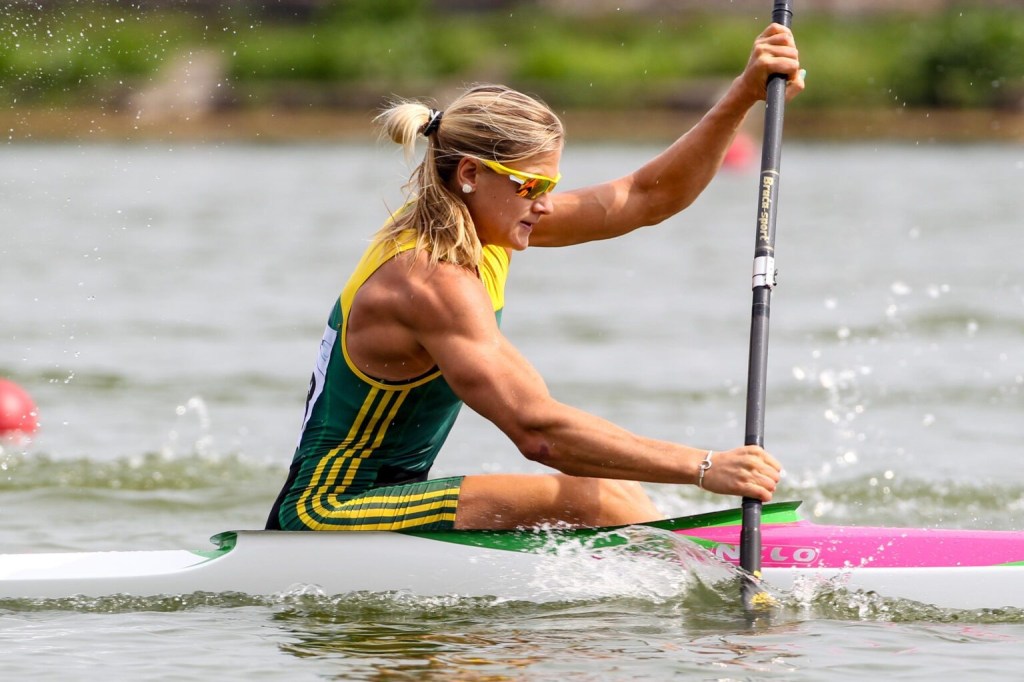
On the way back to the hotel, I found myself sitting next to South African Olympic medalist and Chair of the Athlete Committee, Bridgitte Hartley. What started as a casual chat quickly turned into a fascinating discussion covering a range of topics—training, racing in both sprint and marathon, the Dusi River, and the latest in sports science.
Bridgitte is a great example of late specialization in sports, something I wrote about last week. She only started paddling at the age of 16—a relatively late age for a sprint paddler. By that time, German legend Ronald Rauhe was already winning junior world championships.
Bridgitte’s sporting journey began in Johannesburg, where she was born, before moving to Richards Bay. As a teenager, she took up surfing and even dreamed of joining the world tour. She also practiced gymnastics in high school, showcasing her versatility as an athlete.
However, what I found most inspiring about Bridgitte was her relentless drive to achieve sporting excellence despite the lack of resources available compared to athletes from larger federations.
I shared with her my perspective on the benefits and drawbacks of strong sporting systems like Spain’s in canoeing. When an athlete is highly motivated, these systems provide access to top-tier coaching, sports science, data analysis, fully funded training programmes, and international competition opportunities. But on the flip side, such structures can sometimes lead to complacency and entitlement.
Bridgitte’s path was quite the opposite—she had to seek out a coach, follow him wherever he worked (Hungary, Austria), and even self-fund parts of her training camps. This kind of struggle forces a deeper level of commitment, where every decision is an investment in one’s dream.
It’s a reminder that while we all prefer a smooth journey, true growth often comes from the challenges we face. A rocky path builds resilience and discipline. Every setback is an opportunity to improve, and every tough step brings us closer to our goals.
Psychologists have long studied the role of adversity in human development, and research consistently shows that overcoming obstacles strengthens mental toughness and intrinsic motivation. The concept of grit, as described by psychologist Angela Duckworth, is particularly relevant in sports. It’s not just talent or intelligence that predicts long-term success, but rather passion combined with perseverance. Athletes like Bridgitte, who navigate uncertain and difficult conditions, often develop a level of commitment that cannot be replicated in more structured, comfortable environments.
Struggle also shapes our identity as competitors. When everything is provided—coaches, funding, world-class facilities—there is less need for self-reliance. But when an athlete has to fight for every opportunity, they develop problem-solving skills, adaptability, and a deep sense of ownership over their journey. This aligns with the concept of self-determination theory, which suggests that autonomy—the ability to make one’s own choices—fuels higher levels of motivation and long-term engagement in a pursuit.
Moreover, the psychology of resilience teaches us that overcoming adversity rewires the brain for future challenges. Each time we push through discomfort, our nervous system adapts, making us more capable of handling stress and uncertainty. This is why many of the most successful athletes and teams in history have stories of struggle behind them. The hardship doesn’t just prepare them physically—it forges a mindset that allows them to thrive under pressure.
So, while structured support systems are invaluable, they should not replace the hunger and drive that come from personal struggle. True champions are not just products of great systems—they are shaped by the moments when they had to figure things out for themselves, overcome setbacks, and keep going when the easier option was to quit.
A smooth road may be tempting, but it rarely builds the kind of strength needed to reach the highest level. Success is not about avoiding struggle—it’s about learning to embrace it, using it as fuel, and allowing it to shape us into the best versions of ourselves.
 EKAITZ SAIES
Leave a comment