
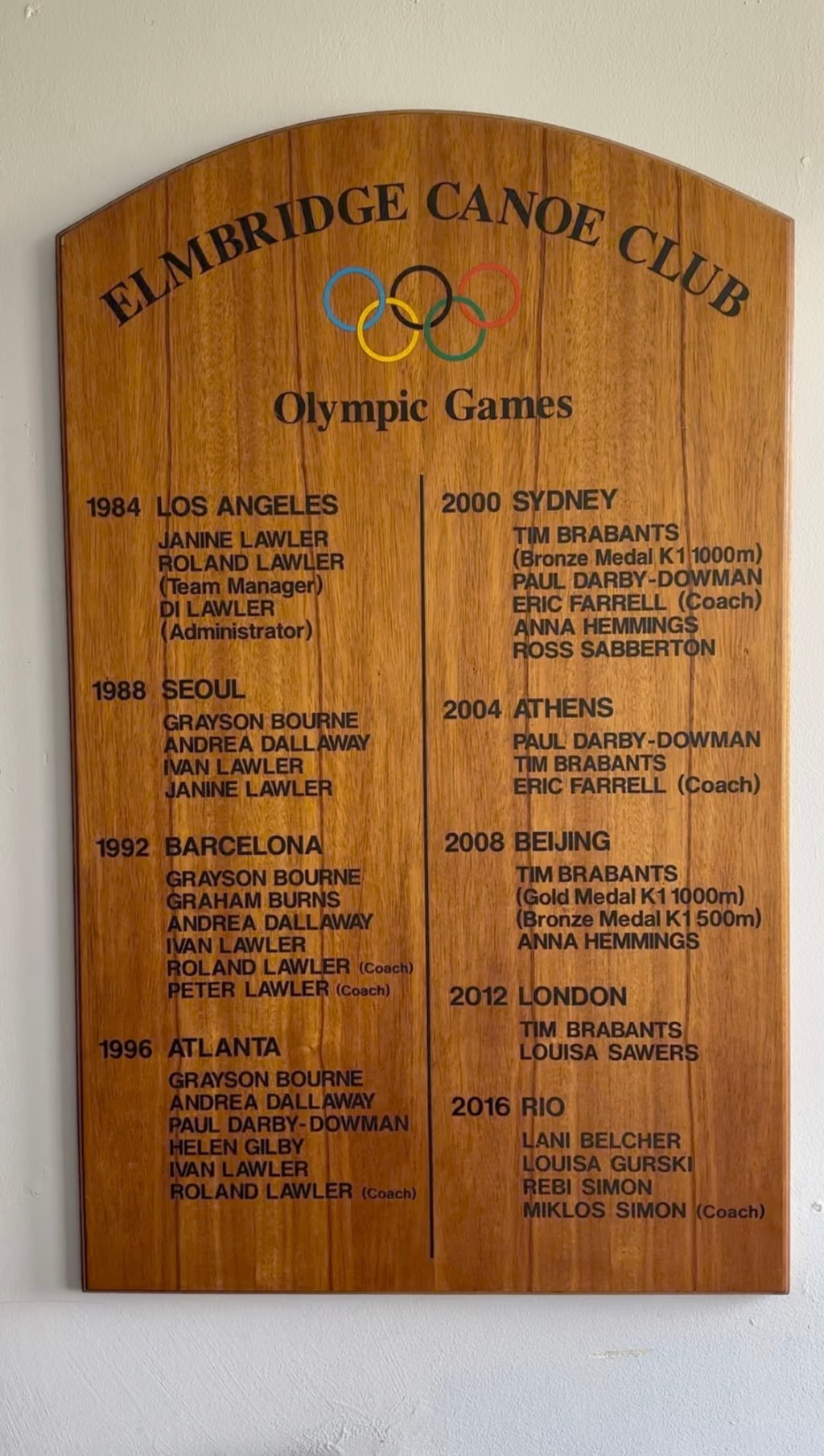
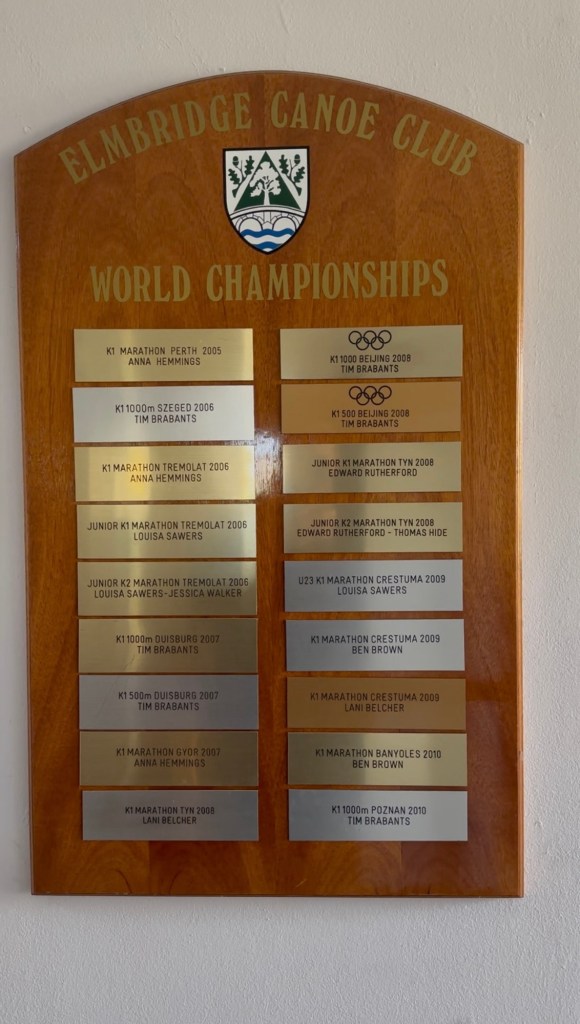
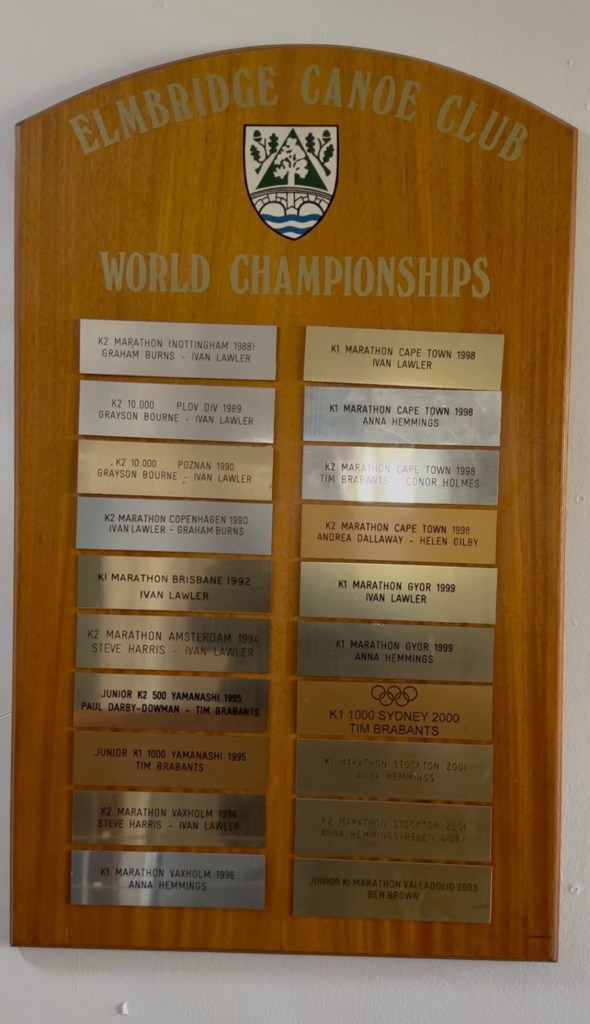
This morning, I visited Elmbridge Canoe Club, where Ivan Lawler, Roland Lawler, and Scott Hynds greeted me warmly. My friend Tim Brabants came from this club, as did many other international paddlers I have met over the years. But when I looked at the wall displaying their results, I was stunned. Despite being a relatively small club, they had produced an astonishing number of Olympians, Olympic coaches and international medallists.
It reminded me of The Gold Mine Effect by Rasmus Ankersen, in which the author explores why certain small, often overlooked places produce an extraordinary number of world-class athletes. One of the book’s key examples is a tiny Cuban boxing club that has consistently developed Olympic medallists, despite limited resources. Ankersen argues that talent hotspots like this are not accidents. Instead, they emerge due to specific environmental and cultural factors that foster excellence —proving that the right environment and mindset often matter more than raw natural talent.
When I expressed my amazement at the club’s record of achievements, Roland —who was a manager and coach at several Olympic Games— pointed out that they only displayed Olympic and World Championship participations. That struck me as a key element of their success. Their culture seemed to be built on setting exceptionally high-performance standards, fostering intergenerational influence where younger paddlers learnt from experienced ones, and instilling a belief that elite success is within reach.
On my drive home, based on the conversations I had earlier, I reflected on the Dutch Olympic system.
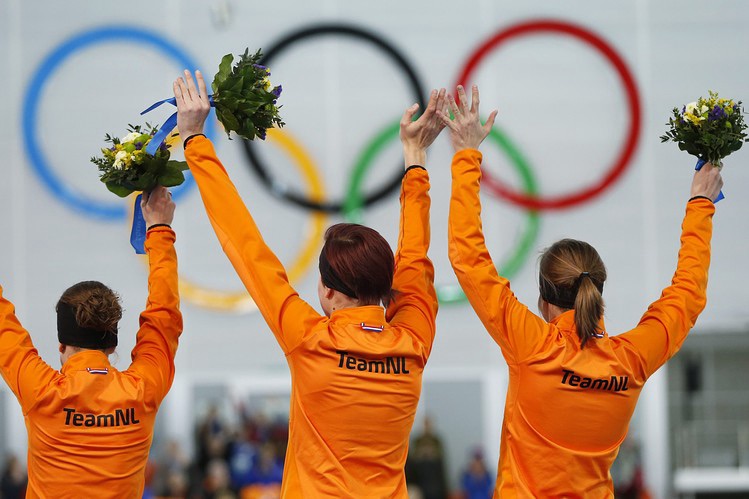
The Netherlands has developed one of the most selective and performance-driven Olympic systems in the world. With its rigorous qualification standards and data-backed approach to athlete development, this system ensures that only the very best represent the country on the global stage. But how did the Dutch Olympic system evolve into such a powerhouse of excellence?
The modern Dutch Olympic system began taking shape in the late 20th century. While the Netherlands has long been a competitive sporting nation, the 1996 Atlanta Olympics served as a wake-up call. The country’s performance was seen as underwhelming, prompting a major reassessment of its sports development strategy.
In response, the Netherlands Olympic CommitteeDutch Sports Federation (NOCNSF) took decisive action. They introduced stricter qualification standards—often exceeding those set by international federations—to ensure that only medal-contending athletes would compete at the Olympics. Simultaneously, they made significant investments in elite sports development, integrating cutting-edge sports science and fostering collaboration between national sports federations, research institutions, and funding bodies.
What sets the Dutch Olympic system apart is its holistic approach to athlete development. Beyond physical training, it incorporates sports psychology, data-driven performance analysis, and access to state-of-the-art training facilities. Athletes train in specialised high-performance hubs designed to maximise their potential, with a relentless focus on innovation and continuous improvement.
By setting qualification standards that push athletes beyond mere international benchmarks, the Dutch system cultivates a culture of excellence. Dutch athletes know that simply meeting the global standard is not enough—they must surpass it. This pursuit of excellence has led the Netherlands to consistently punch above its weight in international competitions, earning medals across a wide range of Olympic disciplines.
By fostering an environment where only the best compete, the Netherlands has established itself as a dominant force in the Olympic movement. This approach has led to sustained success, with Dutch athletes regularly reaching the podium in both summer and winter sports.
The Dutch Olympic system exemplifies the power of setting high standards and committing to excellence at every level. By prioritising quality over quantity, the Netherlands has developed a model that not only produces champions but also inspires future generations to strive for greatness.
Spending time with key figures in our canoeing community over the past few weeks has been very enriching. Every interaction offers fresh insights into our goal of driving success and fostering a strong sense of belonging. Whether at a small canoe club with a legacy of champions or within a national Olympic system built for excellence, the key ingredients remain the same: high standards, mentorship, and an unshakable belief in what is possible.
–

 EKAITZ SAIES
Leave a comment